
Risk warning
Crypto is high risk. It is largely unregulated in the UK. There is no Financial Services Compensation Scheme (FSCS) protection for direct crypto. You can lose all the money you invest. Only use money you can afford to lose in full. This guide is general information. It is not financial advice.
The direct answer
To buy crypto in the UK, choose an FCA-registered exchange, create an account, and pass identity checks. Then complete the risk quiz and wait at least 24 hours. Next, deposit pounds by Faster Payments. Then place a small first order. Finally, check the withdrawal works with a small test amount. Start small. Keep a record for tax.
That answer is 57 words. The rest of this guide explains each step. It shows what a 100 pound buy really costs. It lists which UK banks block crypto payments. It ends with a checklist you can follow on the day.
Is it legal to buy crypto in the UK?
Yes. Buying, selling and holding crypto is legal in the UK. Crypto is not legal tender. Shops do not have to accept it. The Financial Conduct Authority (FCA) regulates how crypto is marketed. It also requires crypto firms to register for anti-money laundering checks. That registration is not the same as full FCA regulation. It does not mean your money is protected. The FCA says you should be prepared to lose all the money you invest in crypto. A full FCA authorisation regime starts on 25 October 2027.
The FCA also bans the sale of crypto derivatives to retail customers. This guide covers spot buying only. Spot buying means you buy the crypto itself. You do not use leverage.
If you want the basics first, read What is cryptocurrency?, What is Bitcoin? and What is Ethereum?.
The FCA published Cryptoassets Consumer Research 2025 on 16 December 2025. It found that 8 percent of UK adults own cryptoassets. That is about 4.5 million people. About 91 percent of UK adults have heard of crypto. Ownership fell from 12 percent in 2024 to 8 percent in 2025. Bitcoin was the most held coin. These figures show that buying crypto is common. They do not show that it is safe.
Choose an FCA-registered exchange
Use a platform that is registered with the FCA for anti-money laundering purposes. Check the firm yourself. Go to register.fca.org.uk. Search for the firm name. Look for registration under the Money Laundering Regulations. Check the firm reference number.
For this guide, the shortlist is Coinbase, Kraken and Bitstamp. All three are FCA-registered for anti-money laundering purposes in the UK. They all support GBP deposits by Faster Payments. Coinbase is run in the UK by CB Payments Ltd, firm reference number 900635. Kraken is run in the UK by Payward Ltd, firm reference number 928768. Bitstamp is run in the UK by Bitstamp UK Ltd, firm reference number 978690. All three numbers were checked against the FCA register and the firms’ own pages on 12 November 2026.
For a safety check on any platform, read How to tell if a crypto exchange is legit: UK safety checklist.
Avoid a platform with no FCA registration. Avoid a platform that lets you buy without identity checks. Avoid a platform that offers a sign-up bonus or a refer-a-friend reward. The FCA bans those incentives for crypto in the UK.
What is KYC?
KYC means Know Your Customer. It is a legal identity check. Every legitimate UK exchange must complete it before you can buy. It comes from the Money Laundering Regulations 2017. You will need proof of identity, such as a passport or UK driving licence. You will need proof of address, such as a utility bill dated within three months. You will need a selfie or a short selfie video. Larger deposits can trigger extra checks, such as payslips. Do not send ID documents by email or chat. Upload them only in the official app or website. Most checks take minutes. Some take hours.
The risk quiz and the 24-hour cooling-off period
UK rules add two steps that surprise new buyers. They are not a fault. They are the law. First, you must complete an appropriateness test. This is a short quiz about crypto risks. It asks if you understand that you can lose all your money. It asks about volatility and FSCS protection. You must pass it before you can buy. Second, you must wait at least 24 hours. This is the cooling-off period. It starts the first time you ask to see the buy screen with a firm. It gives you time to reflect. If you fail the quiz twice in a row, you must wait at least 24 hours before you try again.
How to fund your account
Use Faster Payments. Faster Payments is the UK bank transfer system. It is usually instant. It is usually free on the exchange side. It is the cheapest way to fund a UK crypto account. Do not use a credit card to buy crypto. Many UK banks block credit card crypto purchases. Borrowing to buy a volatile asset adds risk. A debit card is faster in some cases. It is also more expensive. Card fees are often 3 to 4 percent. A card payment is also more likely to be blocked than a Faster Payments transfer. Copy the account details and reference exactly. Send the money from your own bank account. Start with a small test deposit of 10 pounds. Check that it arrives. Then send the rest.
What does a 100 pound buy really cost?
Most guides give a percentage. They do not give a pounds-and-pence total. This section does that. It compares the order book route on each exchange. The order book route is cheaper than the simple buy button. Fees were checked on 12 November 2026. Fees change. Check the live fee page before you buy.
| Exchange | Spread | GBP deposit fee | Trading fee | GBP withdrawal fee | Estimated total cost | Estimated crypto received |
|---|---|---|---|---|---|---|
| Coinbase Advanced | No spread | Estimated 0 pounds | Estimated 0.50 pounds, 0.50 percent taker | Estimated 0 pounds | Estimated 0.50 pounds | Estimated 99.50 pounds |
| Kraken Pro | No spread | 0 pounds | 0.80 pounds, 0.80 percent taker | 1.95 pounds | Estimated 2.75 pounds | Estimated 99.20 pounds |
| Bitstamp | No spread | 0 pounds | 0.40 pounds, 0.40 percent taker | 2.00 pounds | Estimated 2.40 pounds | Estimated 99.60 pounds |
The trading fee is the cost to buy. The withdrawal fee is the cost to move pounds back to your bank later. The total cost is the trading fee plus the withdrawal fee. The crypto received is 100 pounds minus the trading fee. It does not include a price move while you buy. It does not include a crypto network fee if you withdraw crypto to a wallet. That network fee varies by coin and by congestion. It is shown at confirmation.
Coinbase note: the official Coinbase help page confirms that Coinbase Advanced has no spread. It does not publish a fixed Advanced maker or taker percentage. Secondary reviews disagree. Some quote 0.25 percent maker and 0.50 percent taker. Others quote 0.40 percent maker and 0.60 percent taker. This table uses 0.50 percent taker as Estimated. Coinbase also does not publish a fixed GBP Faster Payments deposit or withdrawal fee on that page. The table uses 0 pounds as Estimated. Always check the preview screen before you buy.
Kraken note: Kraken Pro entry tier is 0.40 percent maker and 0.80 percent taker at Tier 1, after a July 2026 fee change. Older pages that quote 0.25 percent maker and 0.40 percent taker are out of date. The 0.80 percent taker and 1.95 pound GBP withdrawal figures were corroborated on 12 November 2026 by three independent guides that checked Kraken’s own fee schedule in October and November 2026. Kraken’s own Pro page confirms the maker-taker schedule and that you see the fee before you confirm each order.
Bitstamp note: the fee schedule valid from 21 October 2026 sets spot fees at 0.30 percent maker and 0.40 percent taker for 30-day volume under 10,000 dollars. Faster Payments withdrawals cost 2.00 pounds. The 4.00 pound figure found in one older source is not in the current schedule. The direct Bitstamp fee schedule page timed out when opened on 12 November 2026, so re-check it before you buy.
The simple buy button costs more
Most beginners use the simple buy button. It is easy. It is also more expensive. The simple buy price includes a spread. The spread is the gap between the price you see and the market price. It varies. Coinbase confirms a spread is included in simple buy orders and a fee applies. Simple limit orders carry a 1 percent execution fee plus a 1.875 percent Coinbase fee, which varies by payment method. No fixed simple buy total is verified. Kraken Instant Buy charges 1 percent plus a variable spread. Invezz tested a 100 pound Kraken Instant Buy in September 2026 and observed 1.90 pounds all-in. That is an observed test, not a fixed fee. Bitstamp Basic Trading carries a fixed spread of 1.8 percent on crypto other than stablecoins, which is 1.80 pounds on a 100 pound buy. A simple buy can cost two to four times more than an order book buy on the same exchange.
Which UK banks block crypto payments?
A block does not mean the exchange is a scam. It means the bank has a risk or fraud policy for crypto payments. Stand With Crypto UK is a crypto advocacy group. It published a report, Blocked: Britain’s Crypto Access Problem, on 20 October 2026. It counted 10,092 complaints about blocked or restricted transfers to crypto exchanges in 90 days from May to August 2026, from 9,803 people. Lloyds Banking Group had 2,297 complaints. Barclays had 1,569. NatWest Group had 1,278. The data is self-reported through an advocacy tool. It is not a representative survey. It is not adjusted for bank size.
| Bank | What the report found |
|---|---|
| Barclays | Published limit: 2,500 pounds per transaction and 10,000 pounds every 30 days. Credit card crypto purchases blocked from 27 June 2025. |
| NatWest, including Royal Bank of Scotland | Published limit: 1,000 pounds a day and 5,000 pounds every 30 days. |
| Santander UK | Published limit: 1,000 pounds per transaction and 3,000 pounds every 30 days. |
| HSBC | Published limit: 2,500 pounds per transaction and 10,000 pounds over 30 days. |
| Lloyds Banking Group, including Halifax and Bank of Scotland | No published crypto-transfer restriction as of 28 August 2026, despite the highest complaint count. Payments can still be delayed or blocked case by case. |
| Chase UK, Starling, TSB, Metro Bank, Virgin Money, Co-operative Bank | Block crypto-related transfers altogether, according to the report. Some older guides list Starling as friendly. That advice is out of date. |
| Monzo | Allows Faster Payments to crypto exchanges within a 5,000 pound rolling 30-day allowance. Binance payments are blocked. |
| Nationwide | Allows 1,000 pounds a day by Faster Payments and 1,000 pounds a day by debit card. Credit card crypto purchases are blocked. Binance payments are blocked. |
| Revolut | No published crypto transfer limit. Has in-app crypto and transfers to some exchanges, but can block or require approval. |
Bank policies change without notice. Check your bank’s own help page before you send money. If your bank blocks a payment, do not retry it again and again. Contact your bank first. Try Faster Payments instead of a card. Try a smaller amount. Use a bank account you already hold that is known to allow crypto transfers.
How to buy crypto, step by step
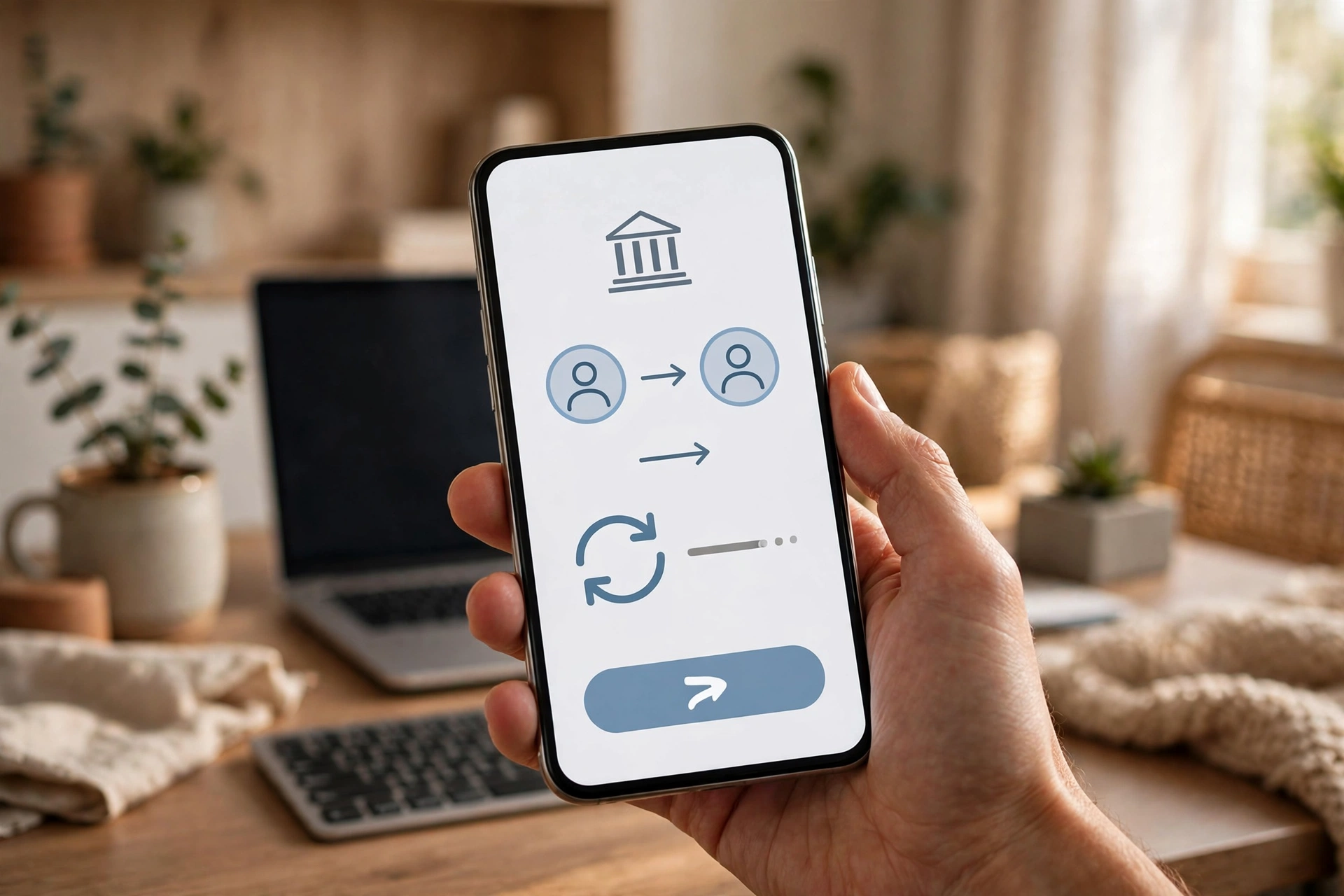
Start small. Many guides suggest 50 to 100 pounds to learn the process. Do not use rent, bill or emergency money. Do not borrow to buy crypto. First, choose your exchange and check the FCA Register. Next, create your account on the official website or app. Use a unique, strong password. Turn on two-factor authentication with an app. Then complete KYC. Then complete the risk quiz and wait at least 24 hours. Then deposit GBP by Faster Payments, starting with a 10 pound test. Then place your first order. Search for the coin you want. Most beginners choose Bitcoin or Ethereum. You do not need to buy a whole coin. You can buy a fraction. Enter the GBP amount. Check the preview screen. Check the price, the spread and the fee. A market order buys at the current price. A limit order buys only if the price reaches the price you set. For a Bitcoin walkthrough, read How to buy Bitcoin in the UK step by step (publishing soon on this site).
Test a withdrawal to self-custody
Do not skip this step. It proves you can move your crypto out. It proves you have the right wallet address. Set up a wallet first. Read Crypto wallets guide: best wallets to use in 2026. Copy your wallet address from the official wallet app. Paste it into the exchange withdrawal page. Check the first and last characters. Send a small test amount first. Check that it arrives. If you leave crypto on the exchange, you rely on the exchange. If the exchange fails, you may lose it. There is no FSCS protection. For larger amounts, a hardware wallet is safer. Read How to back up a seed phrase safely. Never share your seed phrase. No legitimate firm will ask for it.
What should a beginner buy first?
There is no safe crypto. Bitcoin is the largest and most established. Ethereum is the second largest. Both are still highly volatile. Both can fall sharply. Smaller coins carry higher risk. Many fail entirely. Start with a coin you understand. Do not buy a coin because a post promises high returns or a celebrity endorses it. Stablecoins are different. A stablecoin is designed to hold a stable value, usually pegged to the US dollar. It still has risks around reserves and the firm behind it. It is not a bank deposit. Read Stablecoins explained: how to buy them safely UK and Crypto staking explained: rewards and risks UK investors.
Tax and scams
HMRC treats crypto as property, not currency. You do not pay tax when you buy crypto with pounds. You may pay Capital Gains Tax when you dispose of crypto. A disposal includes selling, swapping, spending and gifting crypto to someone other than a spouse or civil partner. A crypto to crypto swap is a disposal even if you never cash out to pounds. For 2026/27, the annual exempt amount is 3,000 pounds. Gains above that are taxed at 18 percent or 24 percent. Keep a record of every transaction: date, coin, amount, value in pounds, and fee paid. From 1 January 2026, UK exchanges must collect user and transaction data under the Crypto-Asset Reporting Framework. The first reports reach HMRC by 31 May 2027. Read Tax on crypto to crypto swaps UK. This is general information, not tax advice.
Scams target beginners. A scam promises guaranteed returns. A scam asks you to send crypto first to receive more back. A scam uses a fake app or a fake website. Download apps only from the App Store or Google Play. A scam asks for your seed phrase. No legitimate firm will ask for it. If you are unsure, stop. Check the FCA Warning List. Read Crypto airdrops explained: how to claim safely UK and How to spot reliable crypto news. If you think you have been scammed, contact your bank at once and report it to Action Fraud.
First-buy checklist
- I have decided an amount I can afford to lose in full. It is not rent, bill or emergency money.
- I have chosen an FCA-registered exchange. I have checked it on register.fca.org.uk.
- I have created the account on the official app or website. I have turned on app-based two-factor authentication.
- I have completed KYC with ID and proof of address.
- I have read the risk warning. I have completed the appropriateness quiz.
- I have waited at least 24 hours for the cooling-off period.
- I have checked the fee preview. I know the trading fee and the spread or the maker or taker fee.
- I have sent a small test deposit by Faster Payments. It has arrived.
- I have checked my bank will allow the payment. I know the bank limit if one applies.
- I have placed a small first order. I have checked the amount, the price and the fee on the preview screen.
- I have set up a wallet. I have copied the address from the official wallet app. I have checked the first and last characters.
- I have sent a small test withdrawal to my wallet. It has arrived.
- I have saved a record of the buy: date, coin, amount, value in pounds, and fee paid.
- I have stored my seed phrase offline. I have not shared it with anyone.
- I have not borrowed money to buy. I have not invested more than I can afford to lose.
If any item fails, stop. Fix the failed item first.
Frequently asked questions
Yes. Buying, selling and holding crypto is legal in the UK. Crypto is not legal tender. It is largely unregulated. There is no FSCS protection for direct crypto.
Most UK exchanges allow purchases from 1 to 10 pounds. You can buy a fraction of a Bitcoin. Start with 50 to 100 pounds to learn the process. Only use money you can afford to lose in full.
Some do, some limit them, and some block them. Barclays, NatWest, Santander and HSBC publish limits. Chase UK, Starling, TSB, Metro Bank, Virgin Money and the Co-operative Bank were identified in an October 2026 report as blocking crypto transfers. Check your bank’s own help page first.
It is a wait of at least 24 hours for a first-time buyer with a firm. It starts the first time you ask to see the buy screen. It gives you time to reflect before you invest.
No. Direct crypto is not covered by the FSCS. If an exchange fails, you are unlikely to get FSCS compensation.
You may pay Capital Gains Tax when you sell, swap, spend or gift crypto and make a gain above the 3,000 pound annual exempt amount for 2026/27. Gains above that are taxed at 18 percent or 24 percent. A crypto to crypto swap counts as a disposal.
For a small first buy, leaving it on the exchange is common. For larger amounts, a wallet you control is safer. Always test a withdrawal with a small amount first.
Conclusion
Choose an FCA-registered exchange. Pass KYC. Pass the quiz. Wait 24 hours. Fund by Faster Payments. Buy a small amount. Test a withdrawal. Keep a record. A 100 pound buy on the order book costs an estimated 0.50 pounds on Coinbase Advanced, 0.80 pounds in trading fees on Kraken Pro, and 0.40 pounds on Bitstamp, before withdrawal fees. A simple buy costs more because of the spread. Check the preview screen every time. Check your bank before you send money. Crypto is high risk and largely unregulated in the UK. There is no FSCS protection. You can lose everything. Only invest money you can afford to lose in full. If you are unsure, do not buy.
Sources
- FCA, Investing in crypto: https://www.fca.org.uk/investsmart/investing-crypto
- FCA, Cryptoassets Consumer Research 2025 (Wave 6), published 16 December 2025
- GOV.UK, Capital Gains Tax rates and allowances: https://www.gov.uk/guidance/capital-gains-tax-rates-and-allowances
- FCA Register: https://register.fca.org.uk
- Coinbase, Pricing and fees disclosures: https://help.coinbase.com/en-gb/coinbase/trading-and-funding/pricing-and-fees/fees
- Kraken Pro fees (0.40 percent maker, 0.80 percent taker, 1.95 pound GBP withdrawal): corroborated 12 November 2026 by three independent guides that checked Kraken’s own fee schedule in October and November 2026
- Bitstamp fee schedule, valid from 21 October 2026: https://www.bitstamp.net/fee-schedule/ (direct page fetch timed out on 12 November 2026; re-check before you buy)
- Stand With Crypto UK, Blocked: Britain’s Crypto Access Problem, 20 October 2026
- HMRC Crypto-Asset Reporting Framework: in force 1 January 2026, first reports due 31 May 2027