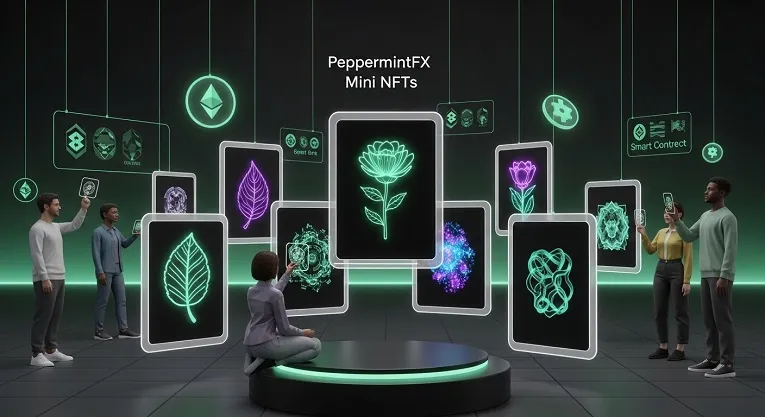
This piece looks specifically at the technology behind NFTs in games, how in-game items actually become blockchain assets, and what standards make true ownership possible. If you want the consumer side of playing and earning, see our separate guide to Web3 gaming and play-to-earn NFTs.
Why Games Use NFTs at All
In a traditional game, item data lives entirely inside the publisher’s database. If the game shuts down, or the publisher decides to remove an item, players have no ownership claim over anything they earned or bought. Representing items as NFTs moves ownership onto a public blockchain that exists independently of any single company’s servers.
The Token Standards Behind Game Items
ERC-721: Unique Items
This standard represents one-of-a-kind, non-interchangeable assets, suited to unique characters, rare weapons, or one-off collectibles where no two items are identical.
ERC-1155: Multi-Token Standard
This standard allows a single smart contract to manage multiple token types, including both unique items and interchangeable stackable items like in-game currency or crafting materials, in one contract. This is significantly more gas-efficient than deploying separate contracts for every item type, which matters a great deal in games with thousands of items.
How Ownership Actually Gets Verified In-Game
When a player connects a wallet to a Web3 game, the game’s client checks that wallet’s holdings against the relevant smart contracts to determine which items the player owns and can use. This verification happens independently of the game’s own servers, which is the core difference from traditional in-game inventories.
What This Enables That Traditional Games Cannot
- Cross-game interoperability, in theory, where an item could be recognised across multiple compatible games, though this remains more aspiration than widespread reality today.
- Player-to-player trading outside the game’s own marketplace, on any compatible NFT marketplace.
- Item persistence beyond the life of the game itself, since the asset exists on-chain independently of the game’s servers.
The Technical Limitations Worth Knowing
Storing full game assets, such as 3D models or textures, directly on-chain is prohibitively expensive, so most NFT game items only store a reference or metadata on-chain, with the actual asset files hosted elsewhere. This means true decentralisation of a game’s assets is often more limited than it first appears, and the availability of the actual asset files can still depend on centralised hosting.
Gas Costs and Why They Matter for Game Design
Every on-chain action, including minting or trading an item, costs gas. Games built directly on Ethereum mainnet without careful design can become prohibitively expensive for frequent in-game actions, which is why most Web3 games use Layer 2 networks or dedicated gaming-focused chains with much lower transaction costs.
Frequently Asked Questions
Do all Web3 games use the same token standard?
No. Most modern Web3 games favour ERC-1155 for its flexibility and gas efficiency, but ERC-721 remains common for genuinely unique, high-value items.
Can NFT game items really be used across different games?
Technically possible if developers choose to support it, but true cross-game interoperability is still rare in practice, since it requires separate development teams to agree on supporting the same assets.
Is owning an NFT game item the same as owning the artwork itself?
Not necessarily. Owning the token typically grants in-game usage rights defined by the game’s terms, which is a different legal concept from owning the underlying copyright to any artwork or design.
This article is for general educational information only.